
The advocate for Jewish causes was born on May 30, 1882
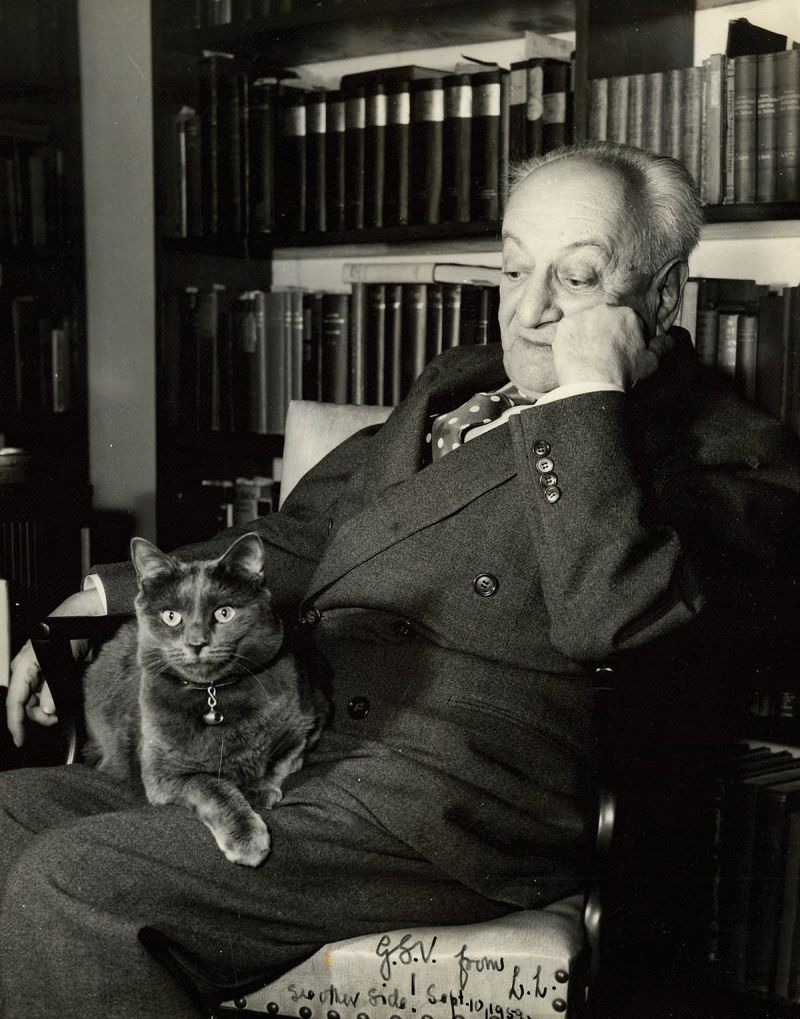


A mention on a Calhoun Street historical marker is our sole reminder of the city’s association with the once world-renowned Ludwig Lewisohn. Born in Berlin on May 30, 1882, into an assimilated Jewish family, he moved with them to America when he was seven, landing in Charleston at 10. An excellent student at the High School of Charleston, he distinguished himself through his intellectual gifts at the College of Charleston, graduating with bachelor’s and master’s degrees in 1901, and became instantly recognized as a rising luminary.
While Lewisohn saw himself as a Charleston gentleman espousing all local beliefs, that is not the way local society saw him. He was blackballed from joining a college fraternity, and his foreign birth and religion (though he did not practice it) kept him an outsider: respected, yes, but not totally accepted socially. He had a hard time gaining work as a professor in New York and beyond due to academia’s anti-Semitism, and when he became a professor of German, his love of the culture won him no friends during World War I. He left teaching and became a national theater critic in the late teens and early ’20s.
His 1922 best seller, Upstream (in which Charleston is disguised as “Queenshaven”), broke new ground on a topic that is still controversial: what does one have to surrender of one’s ethnicity and history to be considered an American? He had been excoriated locally for his first novel, The Broken Snare (1908), which included, but did not condemn, adultery.
Lewisohn’s novel based on his disastrous first marriage, The Case of Mr. Crump, partially set in a building at 115 Calhoun Street, could only be published in Paris in 1926. He lived there among the literary colony that included James Joyce and Sinclair Lewis. Both Thomas Mann and Sigmund Freud called Crump a masterpiece; it was translated widely and finally published in an uncensored edition in America after World War II. Lewisohn translated the works of Nobel Prize winner Gerhart Hauptmann and Franz Werfel’s Song of Bernadette, as well as the works of his friend, the philosopher Martin Buber.
First castigated for his religion, Lewisohn embraced it. He became one of the leading voices for Jewish causes and the founding of Israel. In 1948, he was among the founding faculty members of Brandeis University in Massachusetts. Lewisohn died on the last day of 1955 and was the subject of a more than 1,000-page scholarly biography. While he helped shape intellectual thought in the first half of the 20th century, except for that brief mention on the plaque outside what is now the Delaney Oyster House, he has largely been forgotten here.